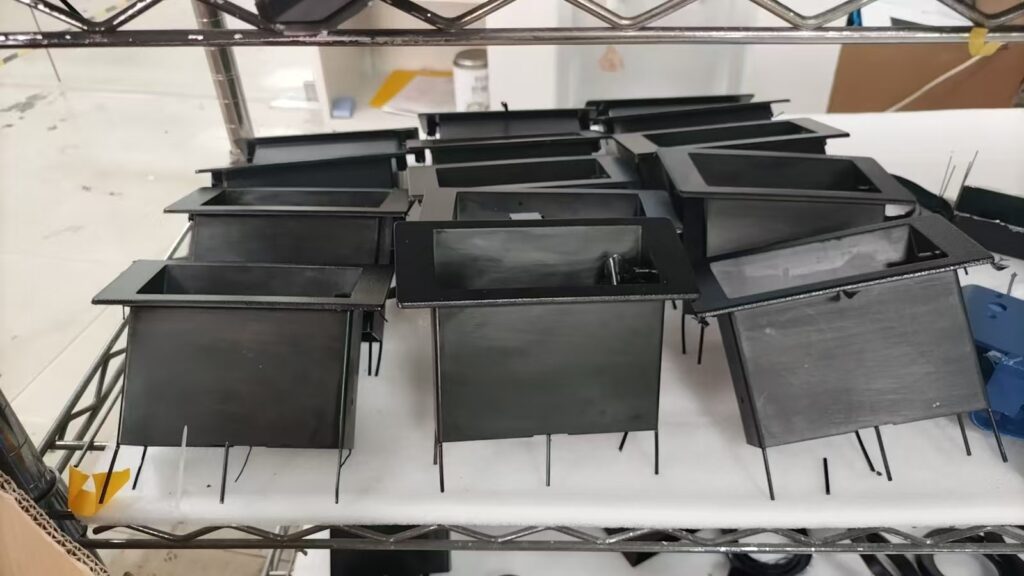
How it began
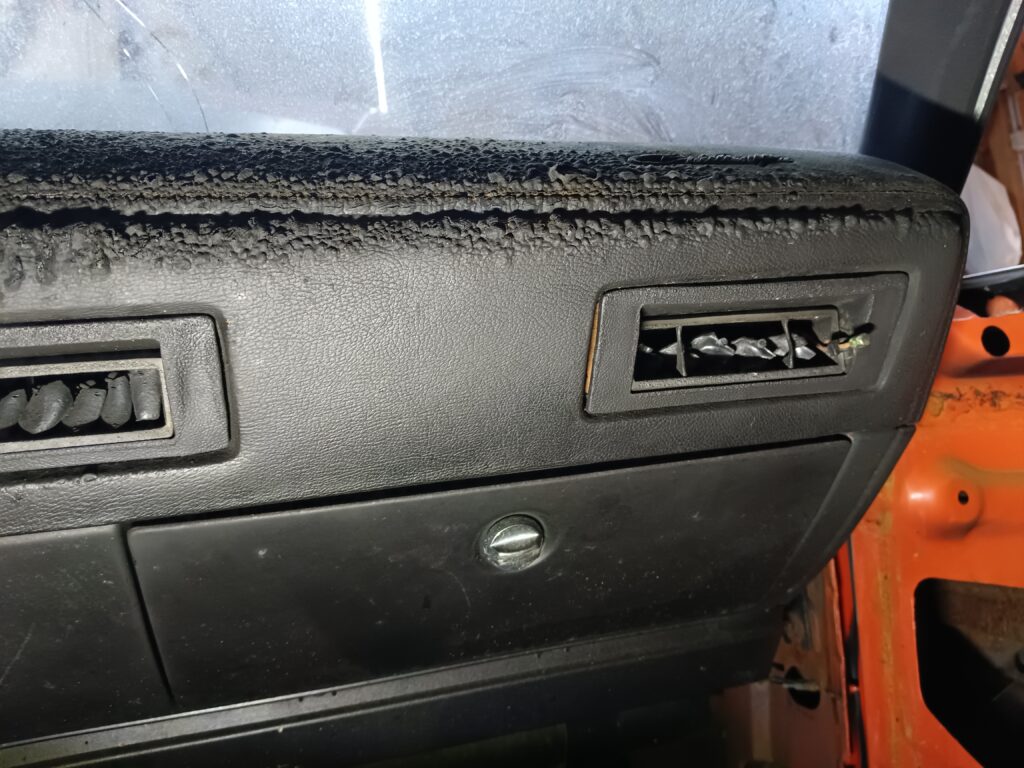
After the delivery of our new project car came the inspection of the damaged areas of the car. A list of the required parts was quickly formed. Fortunately many parts are reproduced or still available as good used ones. But with the AC vents the situation looks completely different. They are most of the time broken or if you are lucky you might find one which will cost you a fortune.
I also realized that I’m not the only one looking for a descent one. People are constantly looking for AC vents. Even perfectly restored E-Bodies on eBay, BaT and other platforms had broken vents because there was no alternative. This is why I started designing them on my own.
CAD-design and Prototyping
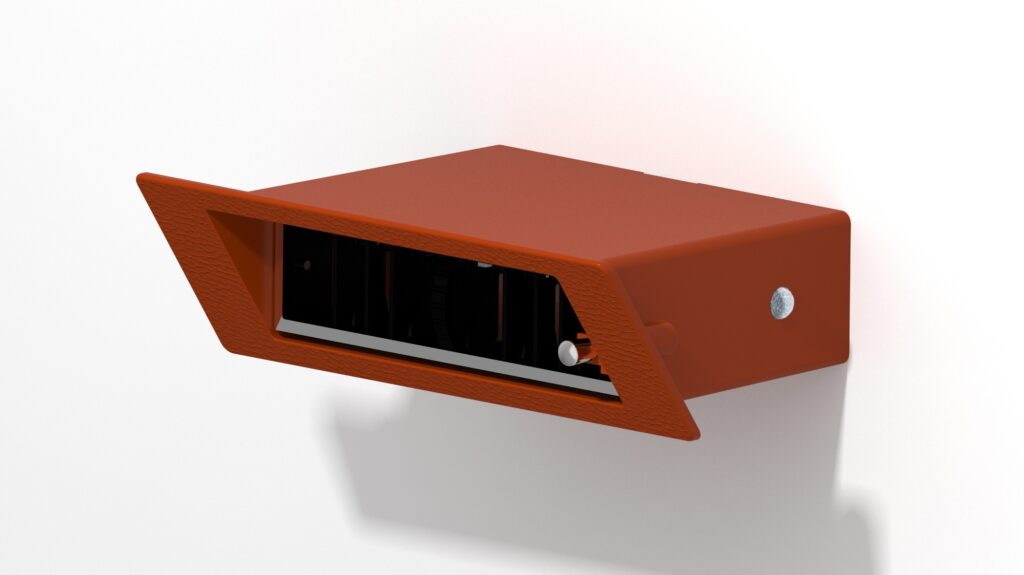
I started designing the passenger side AC vent with remaining pieces of the original one. I really wanted them to look like the originals so I included every single detail like part numbers, vendor codes and other markings. I even designed those with the correct font. Upon further inspection during disassembly it looked like this one was in excellent shape before it got destroyed by a fire.
Did you now that an AC vent consists of 16 different parts and 23 parts in total?
After designing all the parts I made a digital assembly in my CAD software to check fitment and proportions. Next I 3D printed those parts to check physical fitment and also to test mount it on the dash. A few prototypes later I had my final design which was ready for production.
Production
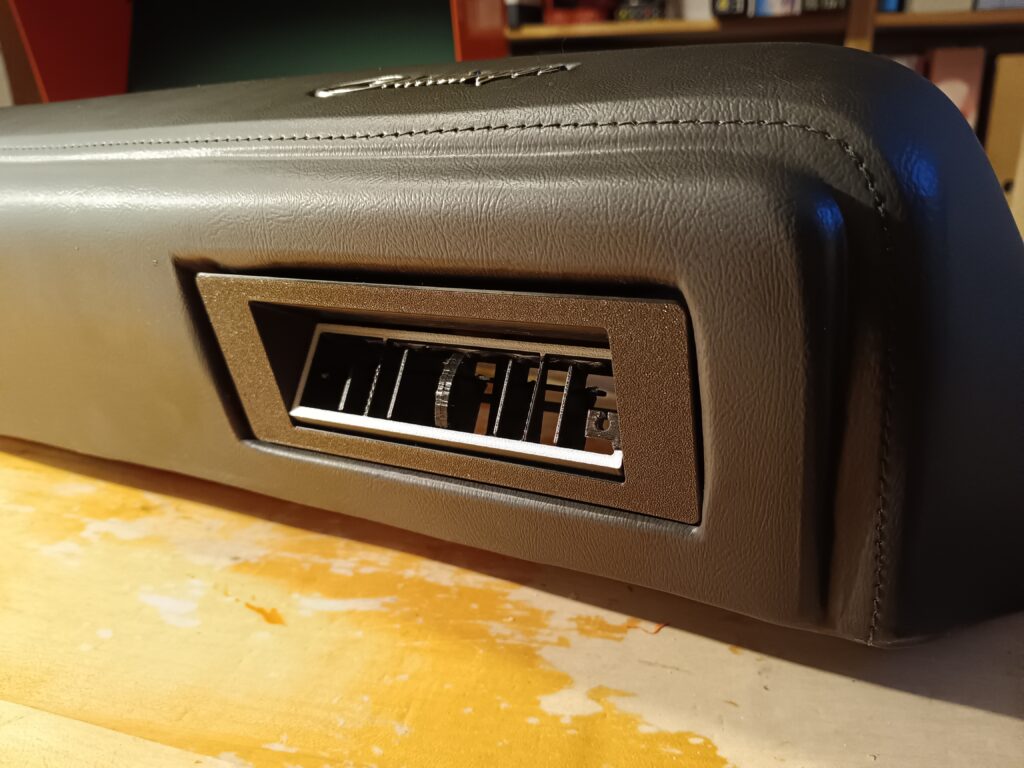
After finishing my design I started doing research how I can mass produce those parts. We even analysed what material the originals were made of to replicate that. At first I wanted to have these parts manufactured using injection molding. But this was way too expensive. It would have cost about 20,000$ in tooling which would only make sense when making about 250 pieces. So after some breaks because I had some other duties to do, like learning for exams in school, we decided to give vacuum casting a try (Please don’t mistake vacuum casting for vacuum forming. This is a completely different manufacturing process.). This may be even the better choice because the material doesn’t warp and it’s also UV light resistant. The only downside was that the production costs per piece were higher then the ones of injection molded parts.